

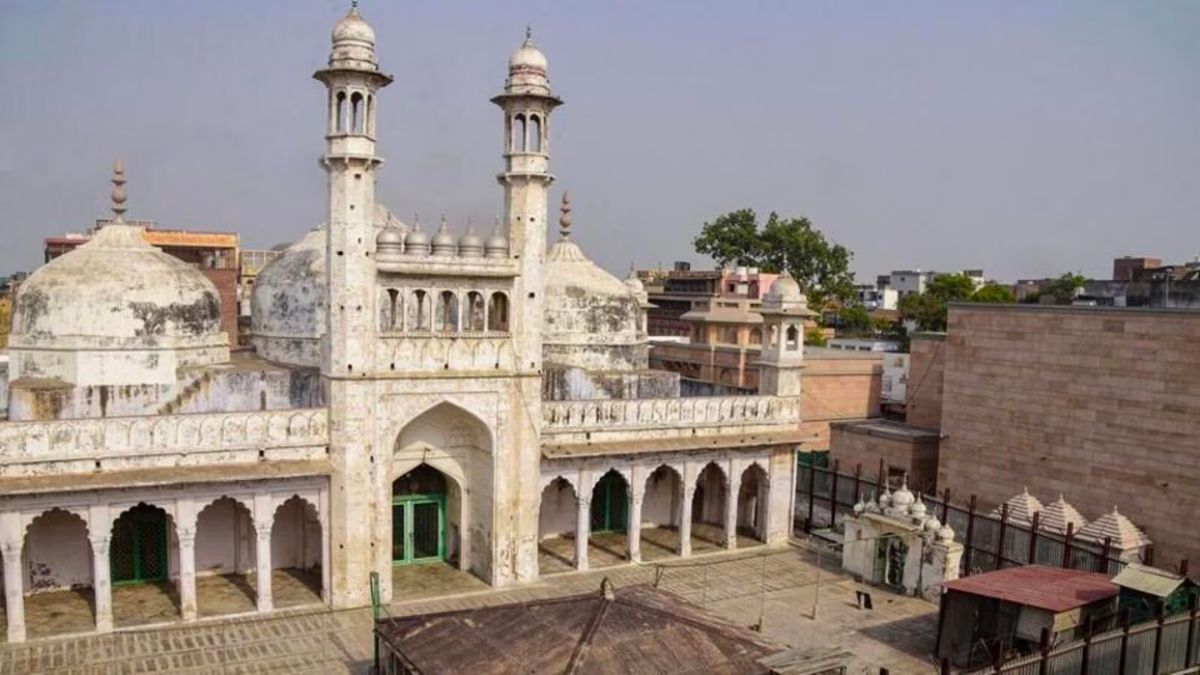
The recent Archaeological Survey of India (ASI) scientific survey report has affirmed the presence of a Hindu temple predating the construction of the Gyanvapi mosque complex. Submitted to the court last month and shared with litigants on Thursday, the report discloses key findings indicating a probable destruction of the pre-existing Hindu structure during the 17th century, particularly under the reign of Mughal Emperor Aurangzeb. The inscription on a loose stone, indicating the mosque’s construction between 1676 and 1677, and historical records citing Aurangzeb’s orders to demolish temples, including the Vishwanath temple in Kashi in 1669, support this observation.
The survey recorded 34 inscriptions in various scripts, such as Devanagari, Grantha, Telugu, and Kannada, featuring names of deities like Janardhana, Rudra, and “Umesvara.” The reuse of these inscriptions in the construction of the mosque suggests the destruction of earlier Hindu temples, with terms like Maha-muktimandapa considered of significant importance.
Examination of pillars and pilasters during the survey indicated the reuse of parts from the pre-existing temple in the mosque’s expansion. Vyala figures on pilasters were found mutilated, supporting the notion that earlier structures were dismantled, and their components repurposed in subsequent constructions.
Integral parts of the existing structure, such as the central chamber and the main entrance, were identified as components of the pre-existing temple. The central hall of the mosque now utilizes the structure with thick walls and floral decorations from the original temple. The main entrance from the west, adorned with carvings of animals and birds, is presently blocked by stone masonry.
Furthermore, the report highlights the reuse of temple pillars to create cellars in the eastern part of the platform, constructed to accommodate a large number of people for prayers. These cellars feature sculptures of Hindu deities and carved architectural elements, providing evidence of the significant existence of a Hindu temple at the site. The ASI’s findings are expected to play a pivotal role in the ongoing dispute over the Gyanvapi mosque site.