
Chinese Military Magazine Downplays Threat of Taiwanese Missile, Citing Vulnerabilities

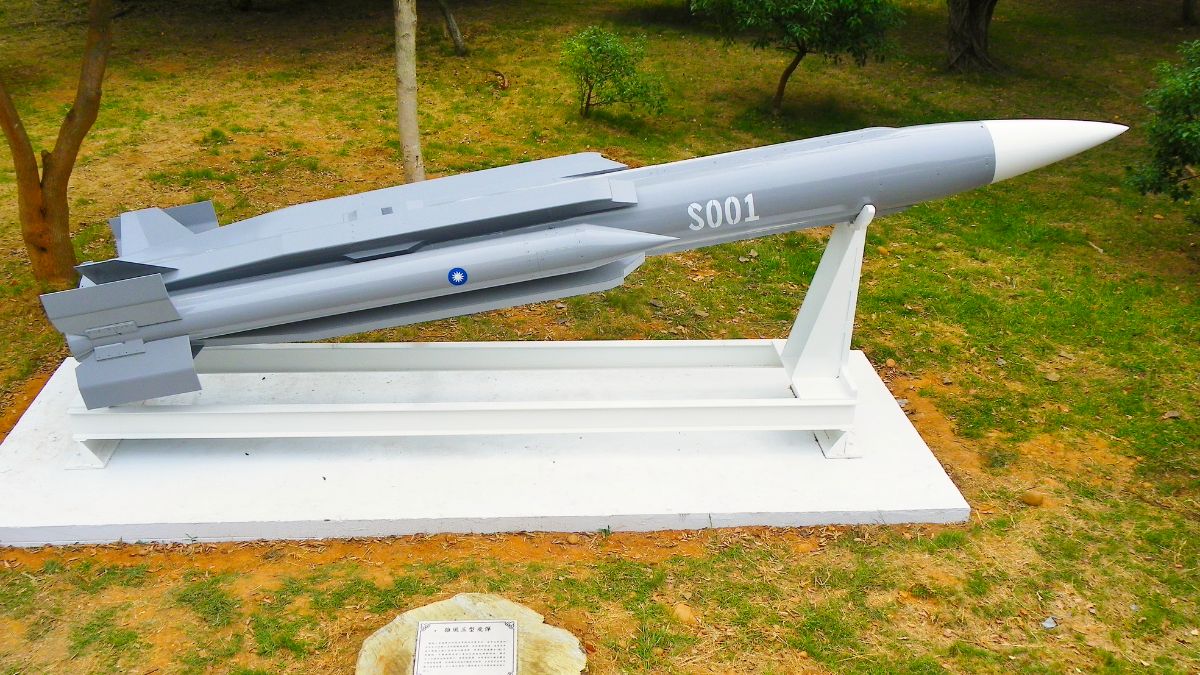
A recent article in a prominent Chinese military publication sought to downplay the perceived threat posed by an advanced Taiwanese missile capable of reaching mainland China. The extended-range variant of the Hsiung Feng IIE missile, named Hsiung Sheng, was reported to have limitations due to its size, subsonic speed, and lack of stealth technology, making it susceptible to detection, as detailed in the late November issue of Ordinance Industry Science Technology.
According to the article, the land attack cruise missile with a reported range of up to 1,200 km (746 miles) is a key component of Taiwan’s arsenal. Despite its range, the publication argued that the missile “can be easily detected, tracked, monitored by modern, sensitive, and precise anti-air radar systems.”
The author, writing under the pseudonym “Yi Qing,” highlighted the alleged shortcomings in Taiwan’s military capabilities, citing limited abilities in reconnaissance and midcourse missile guidance. These limitations, as per the article, could compromise the precision of the Hsiung Sheng missile and render it more susceptible to interference.
Tensions between China and Taiwan have been long-standing, with Beijing asserting its claim over Taiwan as a province that must be reunified with mainland China. While most countries, including the United States, do not recognize Taiwan as an independent state, they oppose any forcible attempts by Beijing to take control.
The People’s Liberation Army (PLA), China’s armed forces, has conducted extensive exercises around Taiwan and frequently deployed warplanes and military ships near the island. The article identified the Hsiung Sheng missile as being operated by the 791 Brigade based in Taoyuan and New Taipei City, although these claims remain unverified.
The South China Morning Post has been unable to independently verify the assertions made in the article. Earlier in the year, Taiwanese media reported a missile test involving the Hsiung Sheng, but the military declined to confirm the details.
Taiwan’s military strategy revolves around asymmetric warfare, emphasizing the use of retaliatory measures to weaken an enemy’s offense. The Hsiung Sheng missile, according to Taiwan’s 2023 national defense report, is classified as a “main weapon” for retaliatory combat. The island nation had allocated substantial funds for the Hsiung Sheng program, reflecting its commitment to enhancing combat capabilities in the face of geopolitical challenges.